Solar battery buying guide
Shopping for a solar battery can feel a little overwhelming, but it doesn’t need to be. Here’s some key things to consider.
Skip to:

What are solar batteries?
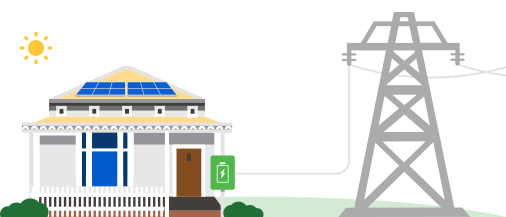
Solar batteries are an addition to a solar system (that’s solar panels and a solar inverter) and works to store excess energy that’s been generated by your solar panels. Without a solar battery, any excess energy is sent back to the electricity grid and you get a solar feed-in tariff for this – but you also pay for electricity that you pull from the grid when the sun goes down or if it’s a really cloudy day and your solar panels aren’t harvesting energy from the sun.
With a solar battery, you’re maximising the use of your solar panels, saving your generated energy for when you need to use it, and reducing your reliance on the electricity grid. Plus, you won’t be left in the lurch during a power outage because batteries can continue to supply stored energy with blackout protection. Blackout protection is a great feature of solar batteries and its cost is determined by how many circuits in your home you wish to protect.
A quick heads up – you don’t need solar batteries for solar panels to work, but you do need solar panels for batteries to work. It’s worth noting that you can install a battery after you install solar panels – they don’t need to be done at the same time – but you could save money by buying and installing them together.
Benefits of battery storage
Reduce your energy bills
Adding a battery to your solar system can help reduce your electricity bill by lowering your reliance on grid-supplied energy, as you’ll be able to draw from your own supply of stored energy.
Reduce your carbon footprint
Your battery stores excess solar power your home doesn’t need to use right away. This means that when the sun goes down, you’ll be able to use that energy instead of relying on the grid, where electricity is still largely produced from traditional fossil fuels.
Help the community
Sometimes, the grid comes under intense demand; for example, when it’s 40 degrees and everyone uses their air conditioner at once. Drawing from your battery can help reduce demand on the grid, alleviating some pressure on the network.
Increase your home’s value
Based on a survey we undertook in 2018, we found that 77% of Australians think a house with solar is more valuable than those relying on traditional energy sources. 57% of homeowners said they’d pay up to $10,000 more for a home equipped with solar, and 60% would pay at least that much more for a home with both solar and a battery.
Be part of the future, now
Take part in cool future-leading initiatives such as joining a virtual power plant. As part of the virtual power plant, you send excess energy that’s stored in your battery into the general electricity grid at peak times – this relieves pressure on the grid during high demand. It can be a great way to get more value from your solar, because you’ll earn credits on your energy bill for participating. Plus you’re helping the community and the environment – that’s a win-win-win.
Don’t be left in the dark
Some solar batteries have blackout protection which means you can continue to use any electricity that’s been stored in your batteries, during a power outage – no candles and torches needed! Find out more in battery back up below.
How it works
When your solar panels produce more energy than what you need in your home right away, the excess energy is stored in your battery to use later, like when the sun goes down.
Here’s how your solar panels and batteries work together:
- Light from the sun – which contains photons – hits your solar modules and is absorbed by lots of tiny cells, often referred to as photovoltaic cells.
- A bit of science happens between the layers of the panels, separating the electrons from the atoms, and boom – the panels transform sunlight into buzzing, bouncing energy!
- The energy that was created flows as a direct current (DC) to the solar inverter, which then transforms the energy into power that can operate your everyday appliances, known as alternating current (AC) energy.
- Excess energy that isn’t needed by the home flows through to the storage battery to use later.
- When all the stored energy is used from your battery, power from the electricity grid will kick in to supply power to your appliances until solar generation is available again.
Understanding how much energy you should expect to get out of a solar battery
To truly understand this, let’s start off with a few simple definitions:
- Total capacity: the maximum amount of energy a battery can store.
- Depth of discharge: the amount of energy you can use without damaging your battery. Typically, a solar battery’s stored energy cannot be completely discharged without causing damage to the battery or shortening its life. This brings us to usable capacity.
- Usable capacity: is the portion of energy your battery can safely discharge for you to use under ideal operating conditions.
As usable power gets converted from Direct Current (DC) power (from your battery) to Alternating Current (AC) to run appliances, there’ll be unavoidable losses along the way. Factors such as temperature, rate of discharge and the internal power consumption of the inverter will all contribute to the slight reduction in energy when comparing it to the ‘usable capacity’ stated on the battery data sheet.
What is a virtual power plant and what does it have to do with a solar battery?
A virtual power plant – or VPP – can be described as a technology-centred energy grid. It coordinates thousands of energy assets – including connected home solar batteries – to work together like a mini power station to manage supply and demand.
If you choose to enrol a battery into a VPP, you’ll be supporting the transition to a more renewable energy future by contributing your home-grown energy to the grid during times of peak demand (as opposed to the grid needing to leverage more fossil fuels).
Origin’s VPP, which is called Origin Loop, offers incentives for people who enrol their batteries into the program, or buy a new battery through the program. This includes monthly bill credits and upfront discount on a new battery or bundle (when they remain on board for 5 years).
To learn more about Origin Loop and related offers, see Origin Loop virtual power plant.
Specifications and features
Deciding on the size of your battery
There’s no one answer for how big your battery should be. Instead, you’ll need to consider the following to help you decide:
- Your typical electricity use and pattern of usage If you use the majority of your energy during peak demand periods (rather than the middle of the day) you might opt for a battery with more capacity so you purchase less energy from the grid.
- Your budget Keep in mind, Origin has special offers available, and in some states, government rebates are in place to help reduce the upfront cost, depending on eligibility
- If you have an export limit on your existing solar inverter Limits are imposed by the Distributed Network Service Provider in your area. This limits the amount of power your solar inverter can export back to the grid. Certain batteries can’t be added to zero-export solar inverters, so this is an important factor to consider.
Battery back-up and outage protection
Batteries store excess power generated during the day, so you can use it at night. Some batteries also offer blackout protection, so that you have energy in the event of a blackout or outage. It’s important to know that not all batteries provide backup, so if it’s something you really want, you’ll need to check the details carefully and make sure you have the right connections in place.

Are there different types of battery backup?
There are two main types of battery backup. The electrical connection you have – single-phase or three-phase – will determine which is available to you.
- Full home backup in a power outage, your battery will supply power to all appliances in your home using the stored energy available in the battery.
- Partial home backup in a power outage, your battery will supply power to a single circuit of essential loads selected during installation, using the stored energy available in the battery.
It’s important to remember that your battery can only provide backup power to appliances with a combined load equal to or less than the backup rating of the inverter.
What’s the difference between single and three phase power?
- Single-phase power has one active power wire, one neutral wire and one earth wire. Residential homes usually have this kind of power supply.
- Three-phase power has three active power wires, one neutral wire and one earth wire. Commercial, industrial and some rural properties will have a three-phase connection, because they need to support higher loads.
Do I need battery backup?
It depends on your circumstances. You might live in an area that’s very prone to power outages, or, you might have never experienced one at all. Consider whether it is something that is important to you before making a decision on the battery you wish to buy.
How safe are solar battery systems?
When installed by an accredited electrician and properly maintained, solar batteries are safe to have at your home.
In general, the following should be kept in mind:
- Lithium-ion batteries need to be properly installed or they pose a fire hazard as their chemical composition can lead to combustion/overheating if not installed correctly.
- Items and equipment should not be stored on top of a battery.
- Batteries need to be installed in a well-ventilated space.
Like any product, sometimes faults and defects occur, and recalls are required to minimise risk and keep people safe. You can view recent product recalls and media alerts applicable to solar batteries via the following websites:
Battery lifespan and warranty
Solar batteries can last 5 to 25 years with the most common lithium-ion batteries having a lifespan of up to 15 years. The following factors can impact how long a solar battery may last:
- Battery type: lithium ion, or lead acid
- Cycles: Charge and discharge cycles of your battery
- Environment – extremely cold or hot temperatures.
It’s also best to check out the warranty of your solar battery. Warranty periods are determined by brand and model of the battery you buy.
Costs and payback
How much does a solar battery cost?
The average cost of solar batteries is around $1,000 per kWh. So, for a 10kWh capacity battery, you can expect to pay upwards from $10,000. With that said, the price of solar battery storage is usually influenced by the following:
- How much capacity you need
- If you need to pay for backup functionality
- What government rebates and incentives are available in your State
- If your battery is purchased as part of a virtual power plant scheme
- The brand of the battery.
It’s important to consider that installation of the battery involves additional costs.
Is solar battery storage worth it?
Whether a solar battery is worth the upfront cost or not depends on your own personal circumstances and preference. You can also request a solar battery quote from us to help in making your choice.
As mentioned earlier in this guide, there are many benefits to adding a battery storage system to your solar panel system, including:
- Increased energy independence
- Environmental benefits
- Potential VPP payments and discounts
- Blackout protection (if included).
However, with the upfront cost ranging anywhere between ~$15,000 – ~$25,000 for most batteries, plus installation, and the payback period often coinciding with the end of the warranty period, ultimately it is up to you to decide whether the initial financial outlay is worth it in the long run for your household.
Government rebates on solar batteries
Depending on where you live and what programs are available, some federal and state rebates are in place to help reduce the cost of buying and installing a solar system. The Victorian battery rebates program provides a point of sale discount up to $2,950 to eligible customers. Recent programs in South Australia and the Northern Territory have now ended.
You can use energy.gov.au’s rebates and assistance tool to help you find what’s available depending on where you are in Australia.
It’s good to remember that feed-in-tariffs (FITs) paid to you for feeding electricity generated by your solar panels and back into the grid, are still generally available even if the FITs aren’t as high as they were when solar panels first came about.
You might also be interested in…

Compare solar batteries
Compare solar batteries including Powerwall, LG RESU10, and Sungrow SBR HV 9.6. Plus, discover how to connect your battery to Origin Loop VPP.

Origin Loop virtual power plant
Learn about our intelligent network of home solar batteries and how being a part of our virtual power plant – Origin Loop – could benefit you.

Best deals on Origin Solar
See current offers on solar packages, panels, batteries and more. Offers and rebates are regularly updated and pricing varies by state.