Billing made simple
We want your experience to be a positive one – so we’ve made sure your bills are accessible, easy to understand and payable via various methods.


Streamlining your bills
and payment
You can view, download and pay your bills all in the one convenient place.
Know your power
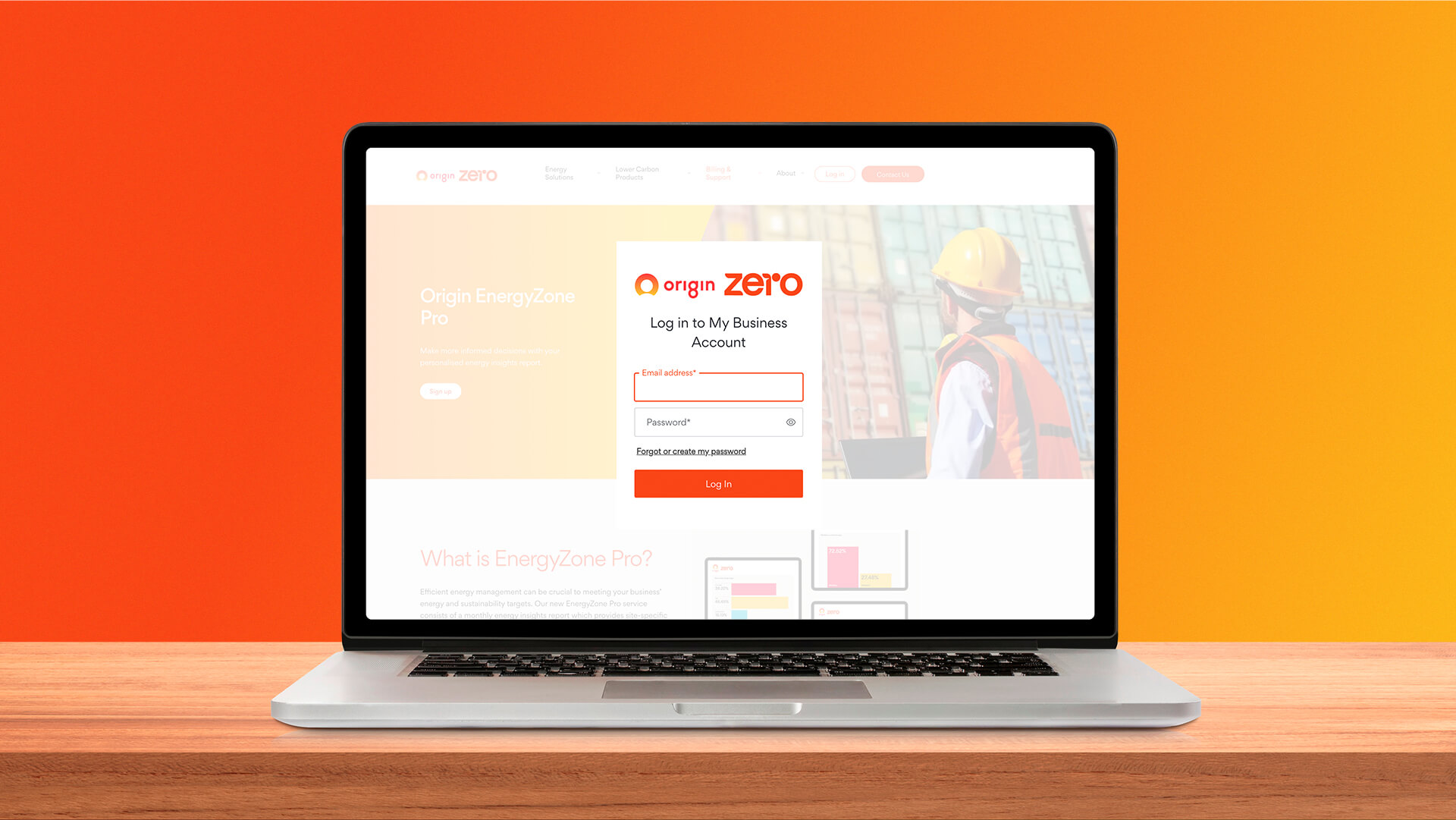
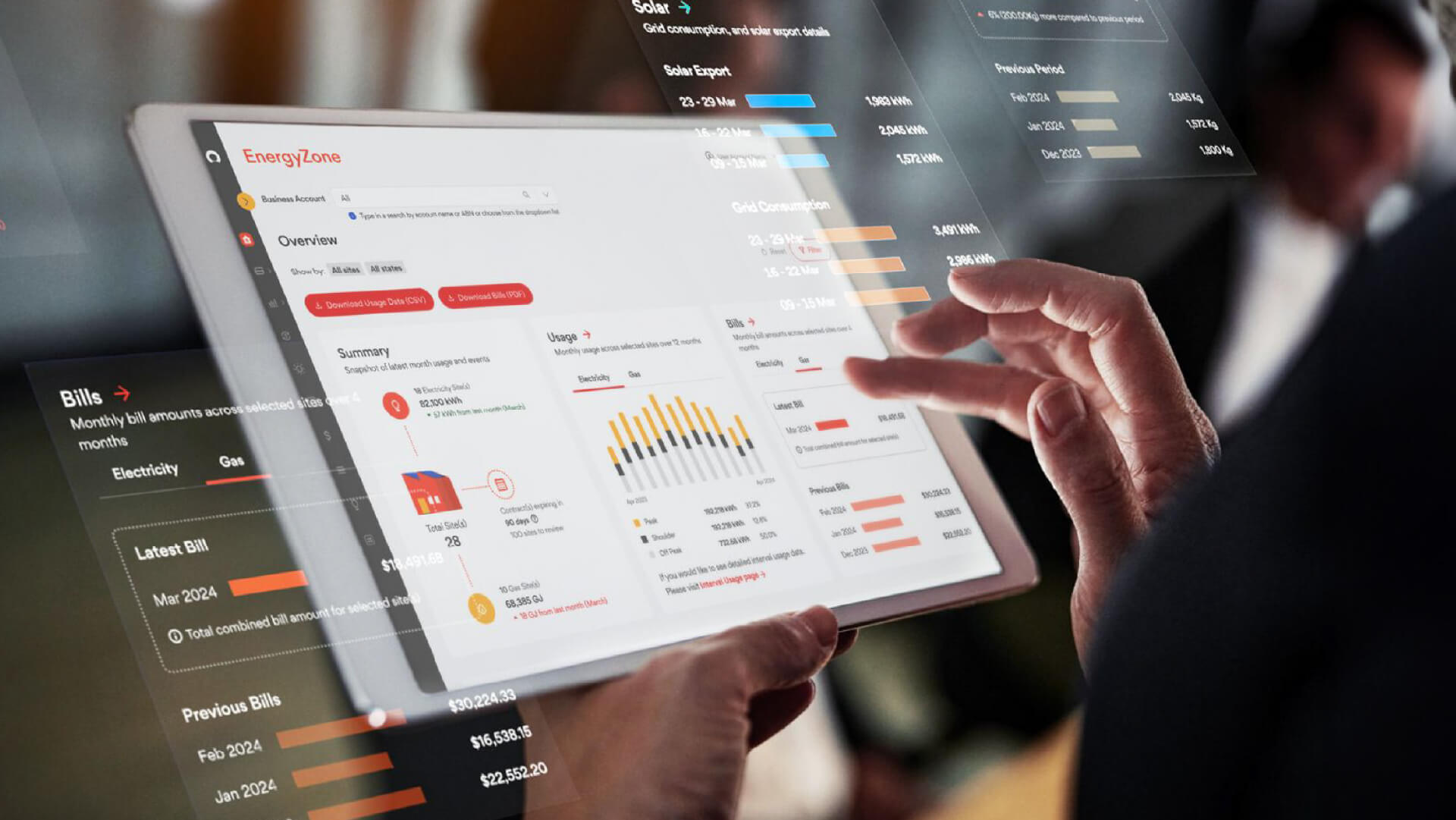
Unlock insights, understand your energy use and know your power when you log into EnergyZone, our online portal.
Understand your bills
Our bill explainers aim to help you understand all the components that make up the price of energy and how to translate what that means on your bills.
How to make a payment

Pay by direct debit
Remove the fuss from paying bills manually.
To setup direct debit via credit card, register at http://www.origin.com.au/ci-pay, go to the Register for Direct Debit tab and follow the steps to complete your setup.
To setup direct debit via bank account, all you have to do is download our direct-debit form, fill it in and send it to directdebit@originenergy.com.au.
Pay by credit card
Call 1300 593 687 or visit http://www.origin.com.au/ci-pay to pay via credit card.
Pay by BPAY
Make payment via internet or phone banking using BPAY.
Biller Code: 747428
Pay by post
Send the payment slip with your cheque made payable to: Origin Energy, GPO Box 3125, Sydney NSW 2001

Moving your business?
Whether you’re setting up a new site or moving to one with existing power, getting in touch with Origin Zero early means we can help you get connected.
We’re here to help
For further assistance on your bills, payments or your EnergyZone account, get in touch with our team.
FAQs
If you’re after support or advice about large business energy solutions or managing your Origin Zero account, we’re here to help. Search our site, browse our Help & Support section or contact us.
How long does it take to setup direct debit?
A direct-debit arrangement typically takes two weeks to set up from when we receive your form, so it will become effective from your next invoice. And remember, you’ll need to pay any outstanding payments using another payment method.
What are regulated charges?
During times of peak demand, the Australian Energy Market Operator (AEMO) may take measures to activate emergency supplies of energy or force high energy consumers to reduce load or shutdown. When this happens, energy retailers are charged for the additional energy or to compensate those users. These costs are passed on to customers who consumed energy in the region during that time.
What are network tariff charges?
Network tariffs cover the costs of maintaining and upgrading Australia’s energy distribution infrastructure, ensuring the safe and reliable delivery of electricity and gas to households and businesses. For electricity, this includes power poles and powerlines, while for gas, it involves pipelines. These charges are set by energy distributors and passed on to customers through their energy retailers. Network tariffs are based on your energy consumption during peak and off-peak periods, reflecting the demand placed on the system.
What are environmental charges?
Environmental charges reflect costs incurred by energy retailers to meet their legislative obligations under the Renewable Energy Target.
These costs are passed through to all energy customers as a direct charge, either as a fixed percentage or based on the percentages published on the Clean Energy Regulator’s (CER) website. Your Electricity Supply Agreement will provide more detail on the percentages and rates that apply.
Additionally, your state may have legislated green schemes that address their renewable energy and energy efficiency objectives as well.
What are demand charges?
Demand charges
- Reflect your business’s maximum capacity to draw energy (measured in kWh) in any given 15–30-minute interval.
- Cover the cost of supplying energy to your business at any given moment. They allow your network provider to ensure your business can draw as much energy as it needs, when it needs it.
Electricity meters record your average energy usage over 15–30-minute intervals and the highest interval for that billing month.
Can I save money on my demand charges?
Yes – small changes to your business practice could generate big savings on demand charges. It might be as simple as turning on major equipment at different times instead of all at once.
And, if you’re a large commercial business, another way you could save on demand charges is by installing a power factor correction unit. Although there is an initial cost for the unit, the average large business typically recuperates these costs from the savings they make within three years.
If you’re interested in finding out how to use power more efficiently and save on demand charges, contact 13 23 34 or email us.