LPG safety
As with any source of energy, it’s really important to understand how to use LPG safely and responsibly.


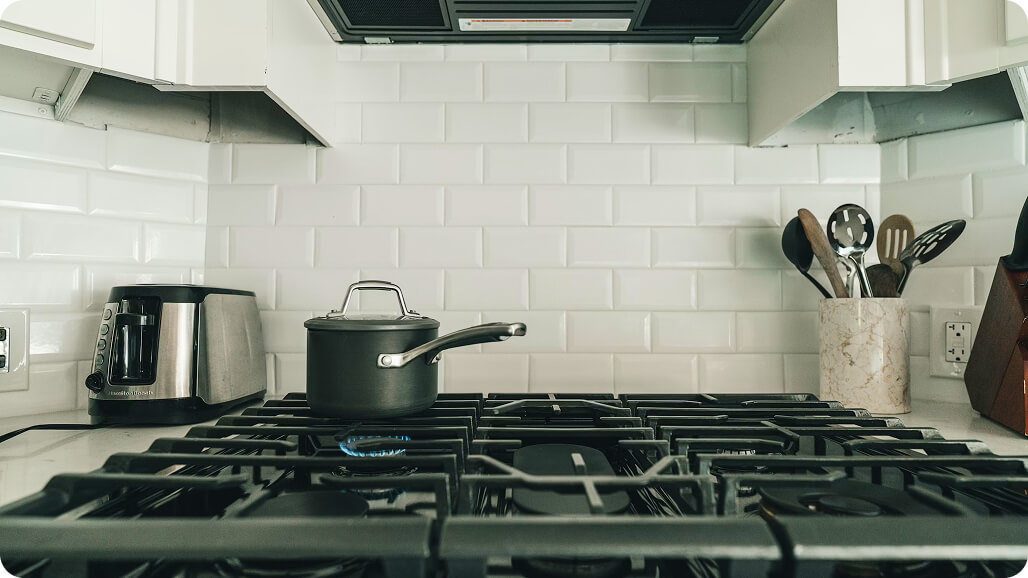
Detecting a gas leak
In its natural state, LPG is an odourless and colourless gas. An odorant is added to make leaks easier to detect. So, when you ‘smell gas’, you’re actually smelling the added odorant.
If you smell gas, check:
1. if any pilot lights on your appliances have gone out
2. if any burners on your stove are accidently turned on
3. the connections to your gas bottle, gas appliances and equipment
4. if your gas cylinder is close to empty. The gas at the bottom may smell stronger, even if the gas bottle isn’t leaking.
Managing a gas leak or emergency
Call our 24-hour hotline 1800 808 526 or 000 immediately if you think you have an LPG leak. Turn off all your appliances and gas cylinders straight away.
Until the emergency service technician arrives:
- open all windows and doors
- don’t light matches, or use lighters or open flames
- don’t smoke
- don’t use electrical appliances or phones and don’t switch on any lights
Is your business managing LPG safely?
Storms, floods and bushfires
Remember, for any life-threatening situation call 000.
Gas bottles are built with safety in mind, which makes them extremely robust and able to withstand severe conditions.
But if you have time, and it’s safe to do so, there are a few things you can do to prepare your bottles in case of fire, flood or storm.
Transcript
Natural disasters are some of the most stressful incidents people endure in their lifetimes. With a hundred different things to think about it can be easy to forget about your gas bottles.
The good news is that gas bottles are built with safety in mind, which makes them extremely robust and able to withstand severe conditions.
But if you have time and it’s safe to do so there are a few things you can do to prepare your bottles in case of fire flood or storm.
The first step is to turn off all your LPG appliances. That includes gas cooktops ovens and hot water systems.
Then stop the flow of gas by turning the valve on top of your bottles clockwise. If you have a larger tank you’ll find the valve on the end or the top of the vessel.
Be sure to turn off any portable cylinders you have too, like the ones attached to barbecues.
Finally, make sure there’s nothing around your gas installation that could combust in high heat or become airborne in high winds. This will help prevent damage to the bottles, your property and people.
There are also a few things you should not do in the event of a natural disaster.
Never move your bottles from where they’re installed or lay them on their side. You should always leave bottles in an upright position, secured to a solid structure and base as this allows pressure to vent during extreme changes in temperature.
Don’t put gas bottles inside a house garage or shed because they could become a hazard for emergency response teams.
And, lastly, never cover a gas bottle with wet material during a fire as it could dry out and combust, heating the cylinder after the event.
If your property has been impacted by a natural disaster you’ll need to have all gas appliances, bottles, regulators, piping and components checked by a qualified gas fitter before the supply can be turned on again.
For post disaster support and for updates about any planned gas deliveries you can always call us on 13 35 74.
Using gas bottles safely
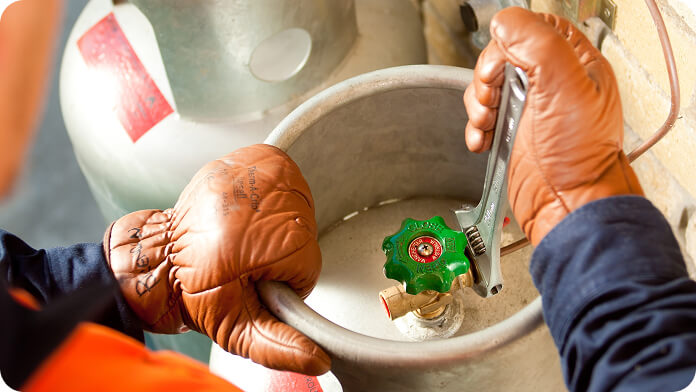
Filling gas bottles
LPG expands when the temperature rises – so you can’t fill a bottle to full capacity.
There are Australian standards that set maximum fill levels for LPG cylinders to make sure there’s room in the gas container to safely expand and contract.
And remember, you can never fill your household gas bottles with automotive LPG (and vice versa) as they have different chemical makeups.
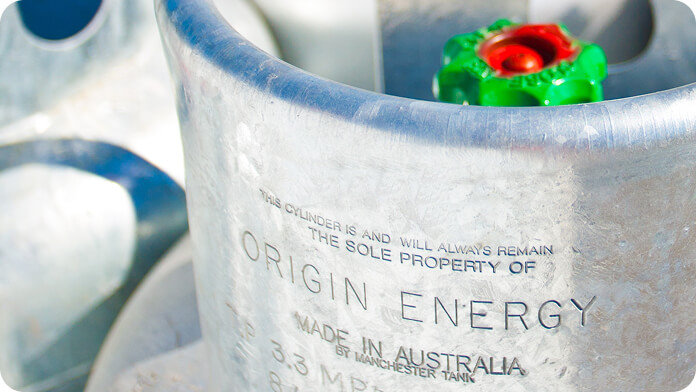
Testing LPG cylinders
All gas bottles must be inspected and tested to make sure the cylinder is undamaged and safe to use.
You can tell when a bottle was last tested by checking the date stamped on its collar, neck or foot ring.
Out of date cylinders can’t be refilled – which is why we may need to replace or collect old gas bottles on your property for retesting.
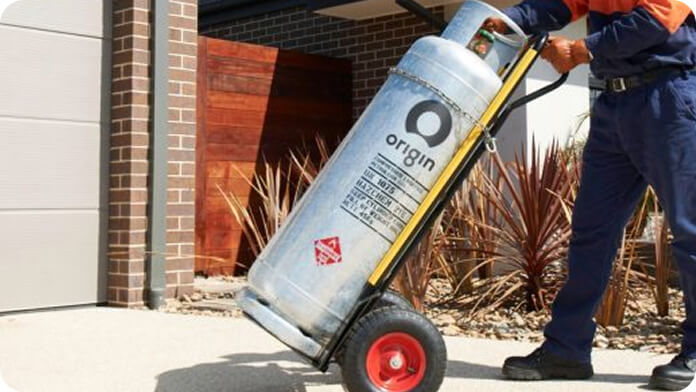
Storing and transporting LPG
You must always keep gas bottles upright, standing on a solid base – otherwise they can’t vent properly. You can’t store them indoors, in direct sunlight or near an ignition source.
Only smaller gas bottles that weigh 13.5 kg or less are safe to transport in your car. If you transport them, keep them upright in your boot or on your tray, with the valves turned off. And in Queensland, gas bottles that weigh 9 kg or less must also be fitted with a screw-in plastic plug.
For information on metered LPG safety, download our Metered LPG consumer safety awareness brochure (PDF 227 KB)
Talk to us

Give us a call
We’re around from 8am to 6pm AEST weekdays, except on public holidays.

Manage your LPG online
Use My Account or the Origin app to order LPG, track deliveries and pay your bills.

Message us anytime
Message us 24/7. Our team will get back to you during business hours.