LPG safety compliance
In Australia, each state has different regulations for the gas industry – which help to control workmanship standards and the safe use of LPG. Whenever you need gas work done, always use a licenced gas fitter. They’re trained professionals who will help make sure installations comply with the regulations for your state and with Australian Standards requirements.
Regulations
Gas regulations are designed to keep you and your property safe.
Gas bottle installations
Gas bottles are placed in specific locations with set clearance zones designed to keep you and your property safe. So, what are the key things to look out for?
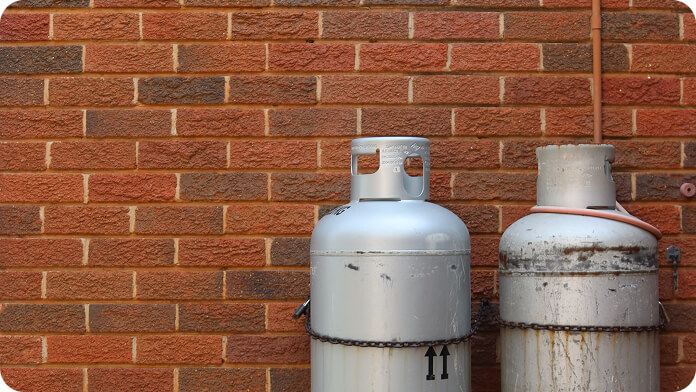
- Solid and upright. Gas bottles must be placed on a solid base made of a fireproof material like concrete or pavers, and kept upright at all times. This will keep the gas bottles stable and allow them to safely vent any excess pressure through their pressure relief valves.
- Cylinder storage. To prevent falls, leaks, movement or damage to LPG cylinders, you must restrain them using safety chains or straps. Alternatively, you can store LPG bottles inside a cage with bump rails that’s made from heavy-duty materials.
- Ventilation. The space the gas bottles sit in needs to be well ventilated. This means spots under stairways, buildings, alcoves or underground locations are usually not suitable.
- No ignition sources. As LPG is flammable, gas bottles must be kept a minimum distance away from ignition sources. This reduces the risk of fire in the unlikely event of a gas leak, or during delivery when small amounts of LPG can escape into the air. Potential ignition sources include anything that carries electricity or a flame, like light switches, power points, air conditioning units, lights, motion sensors, security cameras, hot water heaters or BBQs.
- No building openings. To prevent an LPG leak entering buildings or accumulating in an enclosed space, you must place gas bottles away from any wall openings like windows, doors or air vents.
- No ground openings. As LPG is heavier than air and will sink to the ground if there’s a leak, you must keep gas bottles away from any ground openings like drains or pits.
Gas bottle exchange installations
If you have a gas exchange installation, where we swap your empty LPG bottles for full ones when they run out, view the minimum clearance levels in these diagrams.
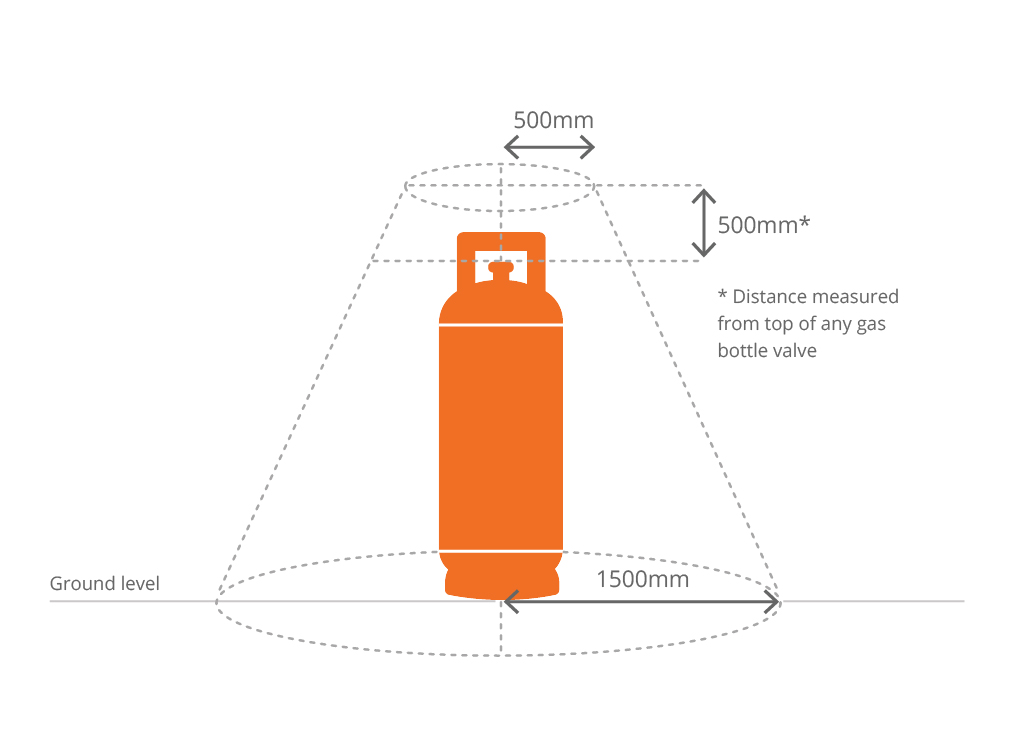
Minimum clearance to ignition sources
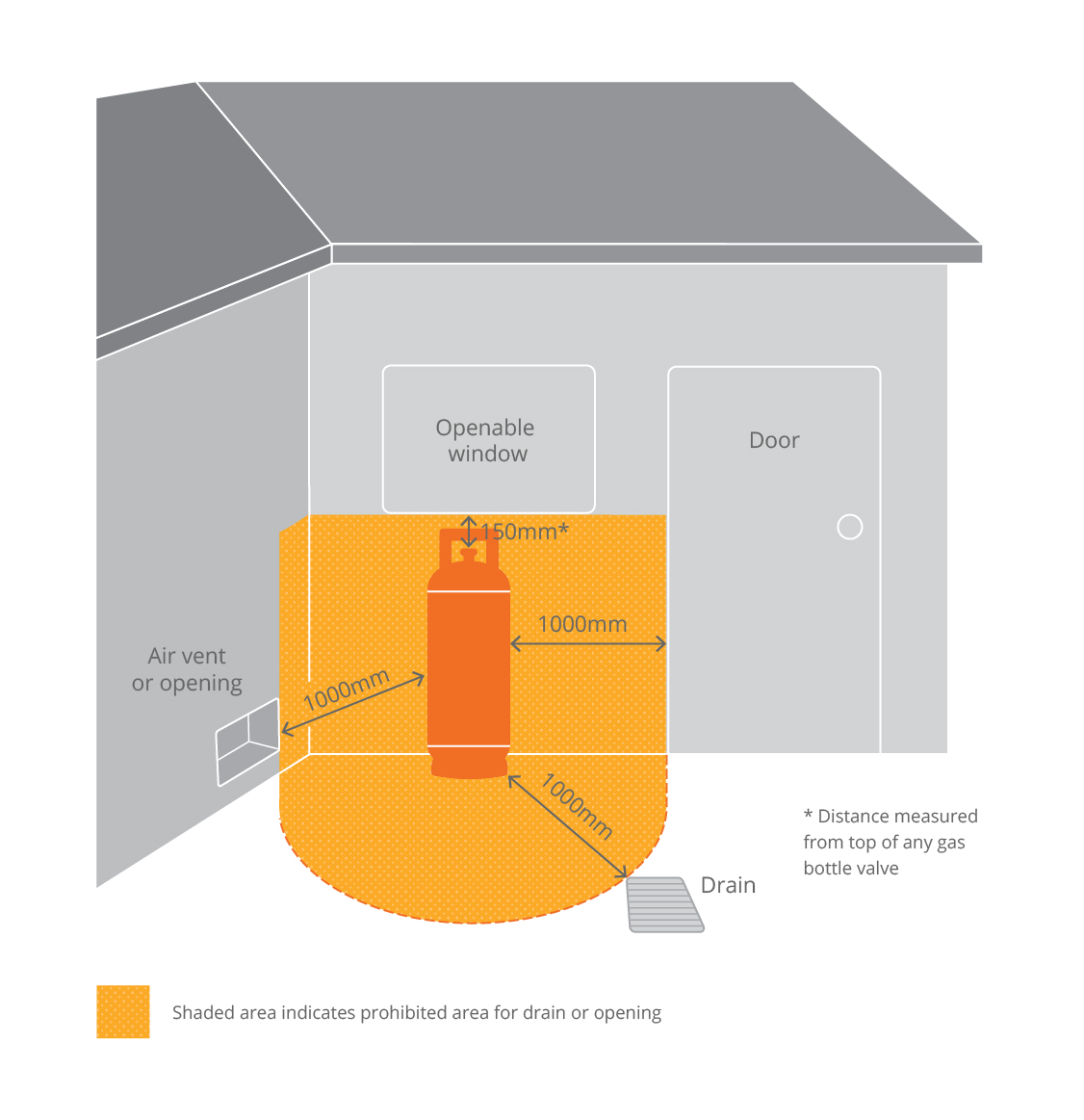
Minimum clearance to openings
Gas refill installations
If you receive regularly scheduled deliveries, where a gas truck tops up your LPG onsite, view the requirements for your installation in these diagrams.
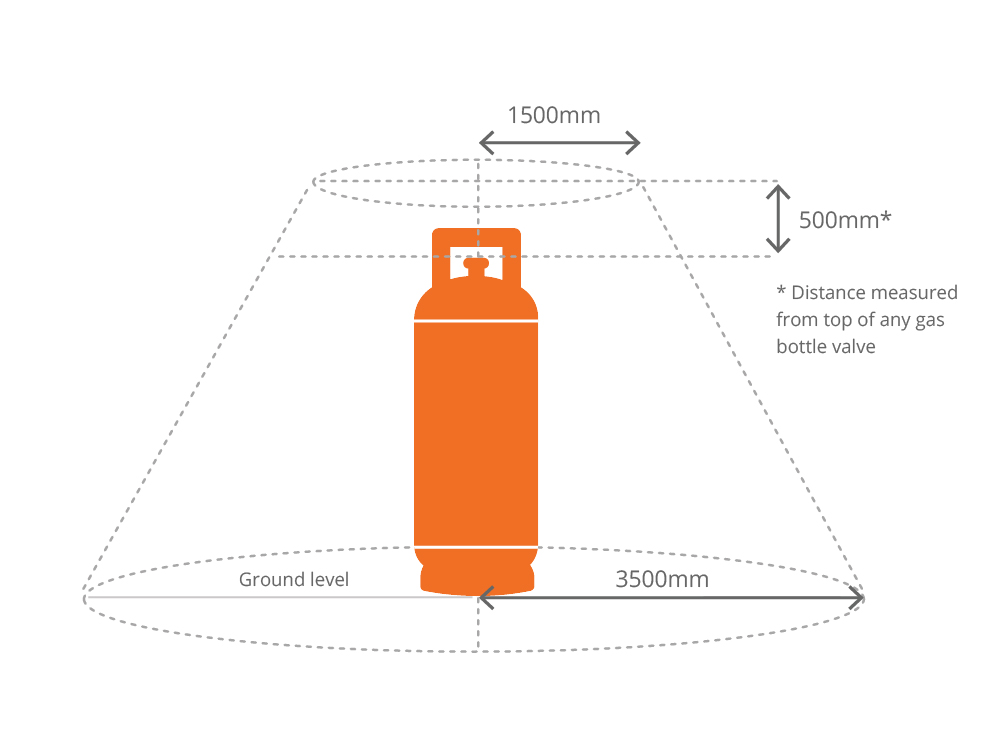
Minimum clearance to ignition sources
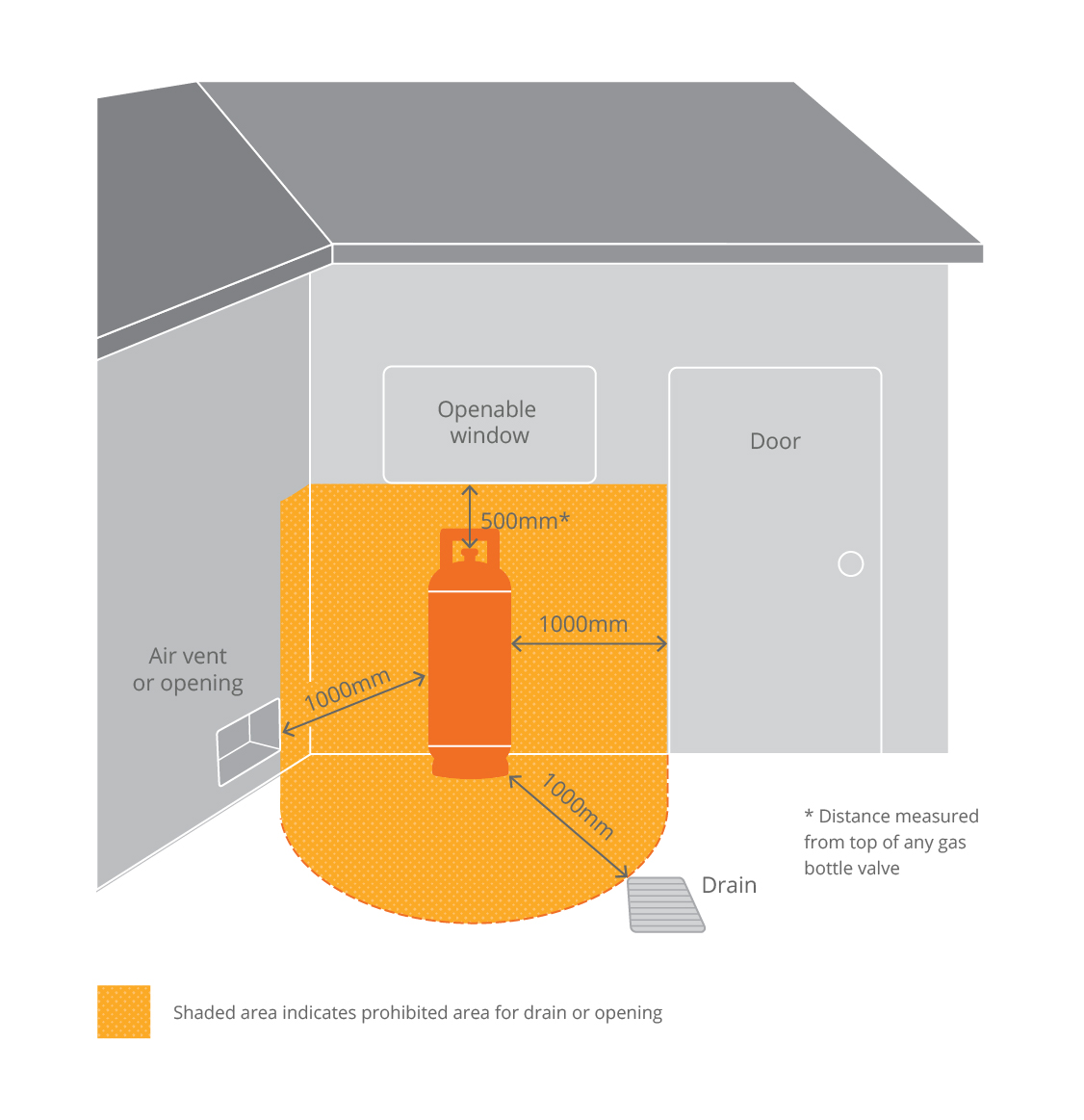
Minimum clearance to openings
Delivery requirements
As well as making sure your gas bottle installation meets Australian Standards requirements, there are some essentials your gas supplier will be looking for when it comes to safely visiting your property. Here’s what they’ll need.
Clear access
Locked gates, steep driveways, uneven pathways, low-hanging trees, lots of steps and unrestrained dogs can all prevent a gas truck and driver from accessing your property.
No obstructions
Keep the space around your gas bottle installation clear. Be sure to keep the area free of shrubs, wood, bins, rubbish and other household items.
A clear line of sight
If your gas is refilled using a hose connected to a gas truck and the driver is on their own, they’ll need a clear line of sight between the bottles and the truck while they’re completing the refill. They’ll also need a space within 30 metres of the bottles to safely park the truck.
LPG compliance documentation
After your LPG installation is complete, your gas fitter must give you compliance documentation to show the relevant regulations have been met.
Keep these documents in a safe place. In parts of Australia, your LPG supplier will need a copy of the document or your compliance number before they can deliver gas to you.
LPG compliance certificates and plates
Each state government regulates this differently, so the documentation you’re given will depend on where you live. Here’s a quick guide:
- ACT – compliance plate affixed to the installation
- NSW – compliance plate affixed to the installation or a Certificate of Inspection/Compliance
- NT – compliance plate affixed to the installation
- QLD – Certificate of Compliance
- VIC – Certificate of Compliance
- SA – Certificate of Compliance
- TAS – LP Gas Storage Notice (also known as a Start Work Notice)
- WA – Notice of Completion (NOC) and compliance badge
Lost your compliance documentation?
If you’ve lost your compliance documentation, you can get a replacement from a licenced gas fitter.
Having compliance issues?
Compliance requirements are regularly reviewed, and the acceptable standards can change.
Your gas supplier won’t be able to deliver LPG until all issues with your installation are resolved.
So, what should you do if your gas supplier or fitter says there’s a compliance problem with your installation?
- If the cause for non-compliance is your LPG bottles, then your gas supplier must fix the issue. If your supplier is not aware of the problem, call to let them know they need to repair the bottles so you can get your gas.
- If the cause for non-compliance is anything else – like problems with the pipework, regulator, appliances or access to the cylinders – you’ll need to get this fixed.
- If the problem is due to the location of the gas bottles, pipework or components, or if there’s a faulty or non-compliant component, the gas fitter will need to test the site, identify the issue and let you know what needs to be done to make the site compliant.
- If there’s a potential gas leak on the installation, the gas fitter will need to conduct a pressure test on the regulator, pipework and appliances, and repair any leaks found.
Get help from a gas fitter
Organise a gas appliance and safety service.
More on LPG safety
Using LPG
There are some simple ways to stay safe when using, storing or transporting gas bottles. Take a look.
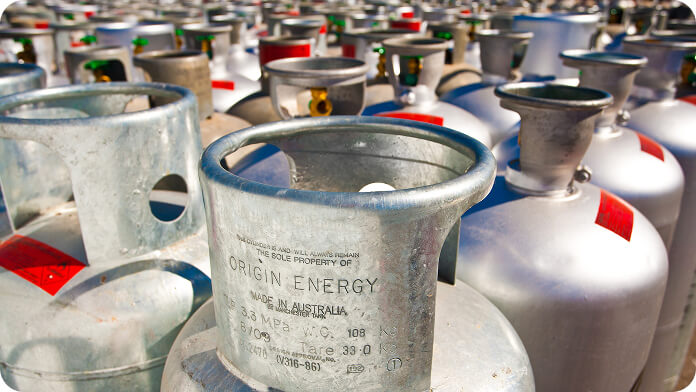
How gas bottles work
Learn the difference between an automatic and manual changeover system, and when to order gas.
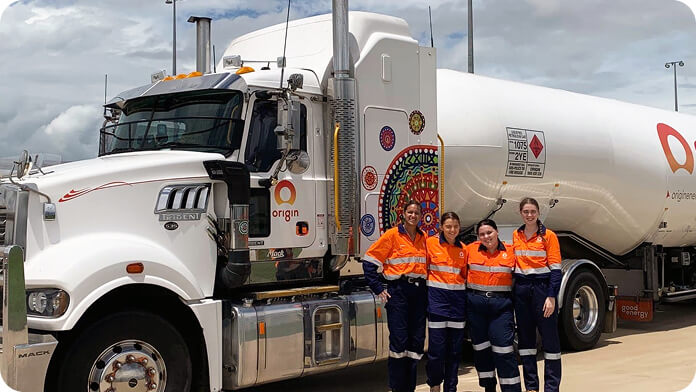
Workplace safety
If you use LPG in your business, familiarise yourself with our guidelines and safety data sheets.
Talk to us

Give us a call
We’re around from 8am to 6pm AEST weekdays, except on public holidays.

Manage your LPG online
Use My Account or the Origin app to order LPG, track deliveries and pay your bills.

Message us anytime
Message us 24/7. Our team will get back to you during business hours.