Compliance
In Australia, each state has different regulations for the gas industry – they help to control workmanship standards and the safe use of LPG.
Whenever you need gas work done, you should always use a licensed gas fitter. They’re trained professionals who will help make sure the installation complies with the regulations for your state and the Australian Standards requirements.
LPG compliance certificates and plates
Once your LPG installation is complete, your gas fitter must give you compliance documentation to show that the relevant regulations have been met.
Each state government regulates this differently, so the documentation you’re given will depend on where you live. Here’s a quick guide:
- Queensland – Certificate of Compliance
- NSW – compliance plate affixed to the installation or a Certificate of Inspection/Compliance
- ACT – compliance plate affixed to the installation
- Victoria – Certificate of Compliance
- South Australia – Certificate of Compliance
- Tasmania – LP Gas Storage Notice (also known as a Start Work Notice)
- Western Australia – Notice of Completion (NOC) and compliance badge
- Northern Territory – compliance plate affixed to the installation
It’s important to keep these documents in a safe place. In some parts of Australia, your LPG supplier will need a copy of the document or your compliance number before they can deliver gas to you. If you’ve lost your compliance documentation, you can get a replacement from a licensed gas fitter.
Compliance requirements are regularly reviewed, and the acceptable standards can change. Make sure you let us know about any problems with pipework, regulators, appliances, or access to cylinders so we can guide you on what you need to do before your next LPG delivery.
Gas bottle regulations
Gas bottles are placed in specific locations with set clearance zones designed to keep you and your property safe. What are the key things to watch for?
- Solid and upright. Gas bottles must be placed on a solid base made of a fireproof material like concrete or pavers and kept upright at all times. This will keep the gas bottles stable and allow them to safely vent any excess pressure through their pressure relief valves.
- Cylinder storage. To prevent leaks, movement or damage, LPG cylinders must be restrained to prevent falling using safety chains or straps. Alternatively, you can store the bottles inside a cage made from heavy-duty materials with bump rails.
- Ventilation. The space the gas bottles sit in needs to be well ventilated – so spots under stairways, buildings, alcoves or underground are usually not suitable.
- No ignition sources. As LPG is flammable, gas bottles must be kept a minimum distance away from ignition sources. This reduces the risk of fire in the unlikely event of a gas leak, or during delivery when small amounts of LPG can escape into the air. Potential ignition sources include anything that carries electricity or a flame, like light switches, power points, air conditioning units, lights, motion sensors, security cameras, hot water heaters or BBQs.
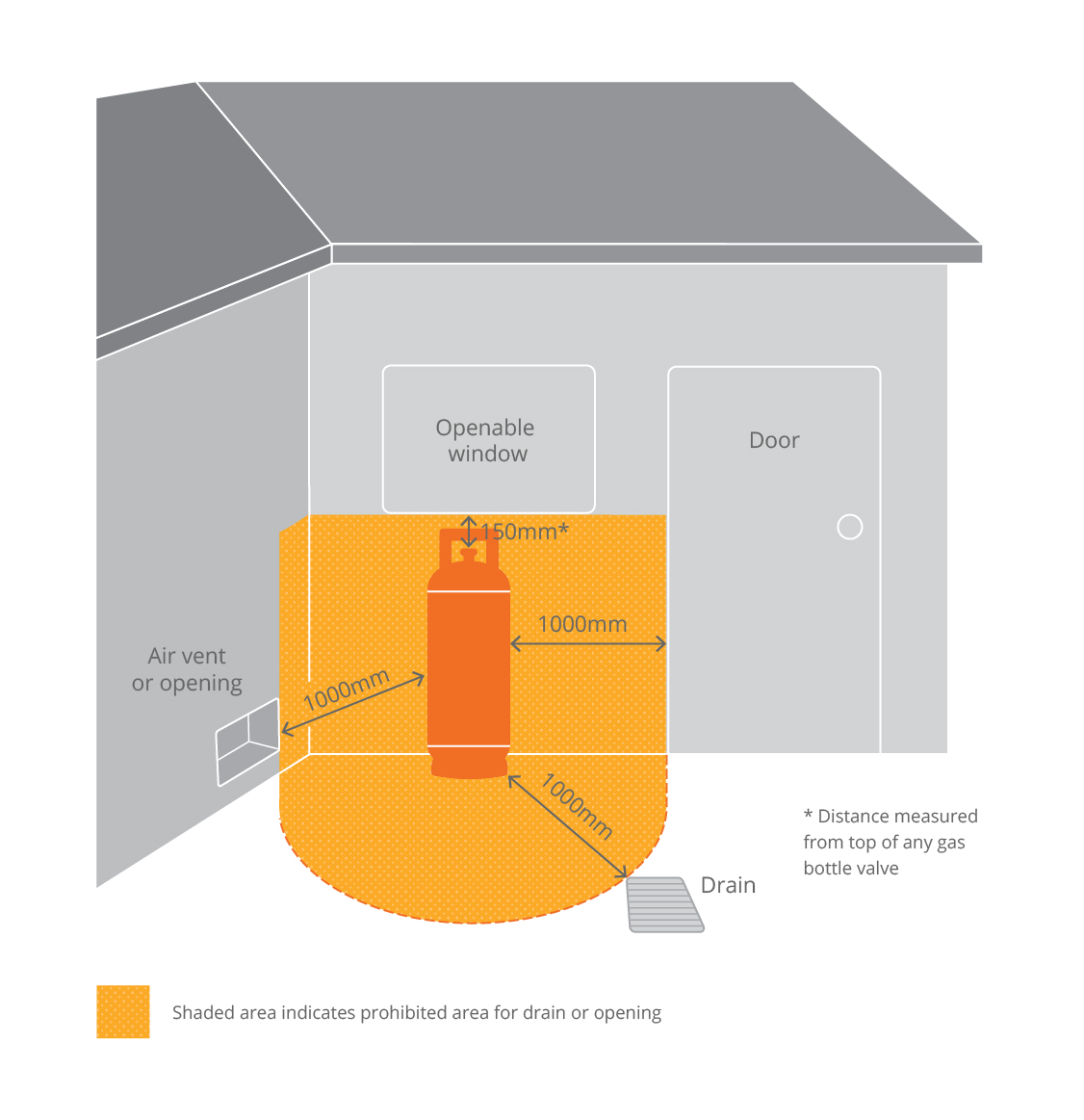
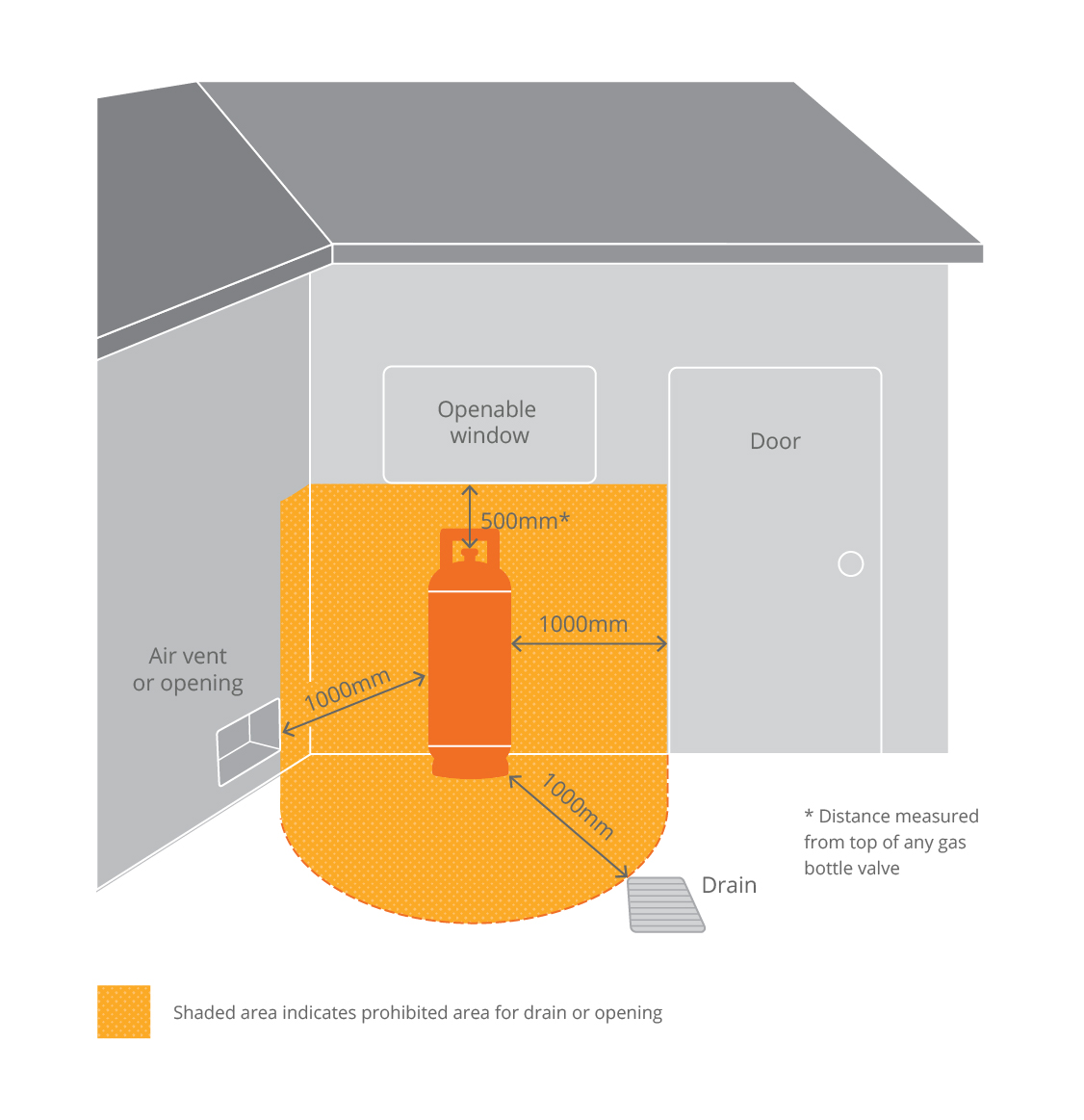
- No building openings. To prevent an LPG leak entering buildings or accumulating in an enclosed space, gas bottles must also be placed away from any wall openings like windows, doors or air vents.
- No ground openings. As LPG is heavier than air and will sink to the ground if there is a leak, gas bottles need to be kept away from any ground openings like drains or pits.
Gas exchange installations
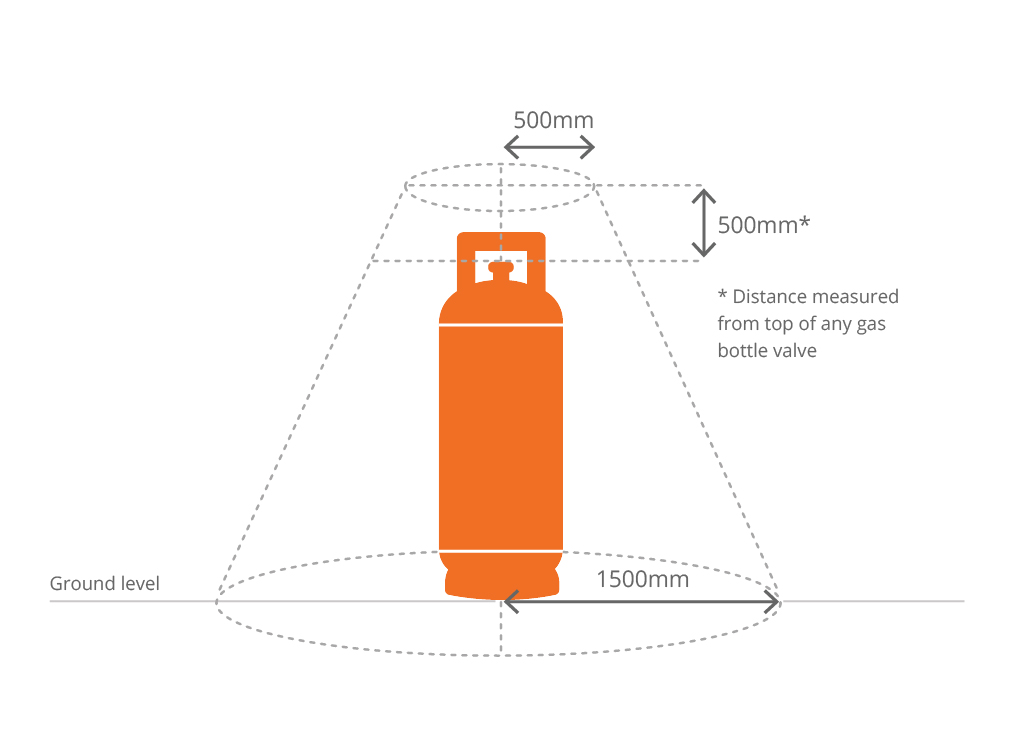
If you have a gas exchange installation – where your empty LPG bottles are swapped for full ones when they run out – the minimum clearance levels are shown below.
Minimum clearance to ignition sources
Minimum clearance to openings
Gas refill installations
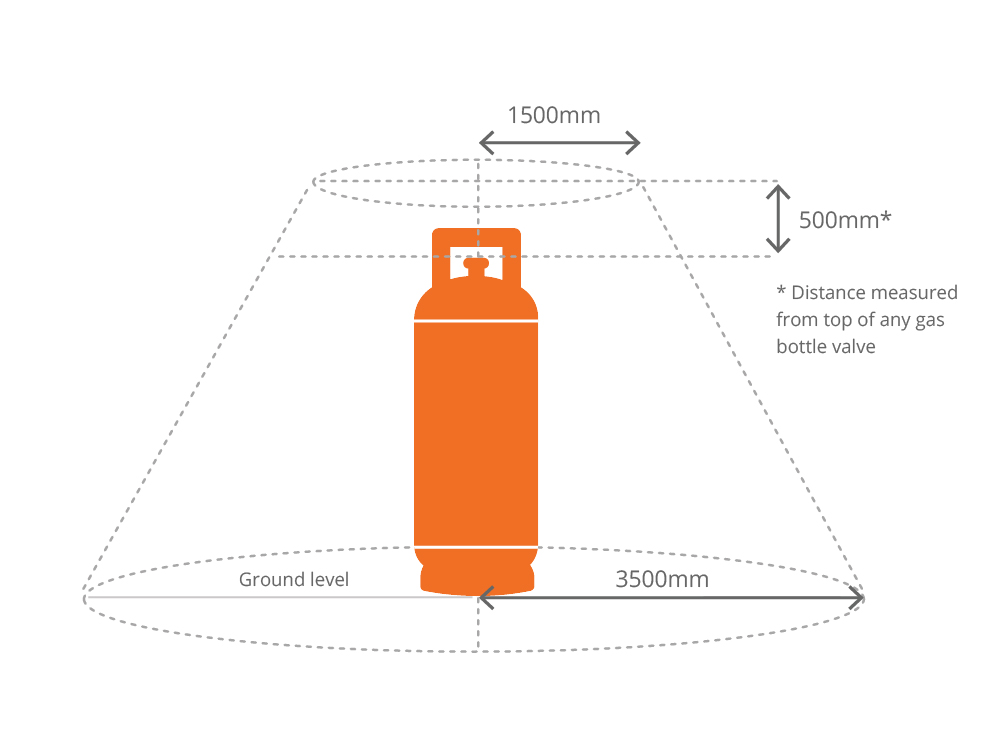
If you receive regularly scheduled deliveries where your LPG is topped up on-site by a gas truck, the below diagrams show the requirements for your installation.
Minimum clearance to ignition sources
Minimum clearance to openings
Is your LPG tank compliant?
For any concerns or problems with your Origin LPG tank, please call us on 13 35 74 as soon as possible. To help us understand what we’re dealing with, please send through as much detail as possible and email relevant photos to BSC@origin.com.au.
If there are compliance issues with pipework, regulator or gas appliances, we ask that you rectify these with the relevant supplier. To keep your staff safe, we are unable to supply LPG until any issues are resolved.

To make sure your business is safe, we can’t deliver LPG until any issues with your installation have been resolved.
A site is deemed non-compliant if the location of the tank is unsafe, access to pipework or components is restricted, and/or there are faulty components. In cases of non-compliant sites, we will require a gas fitter to test the site, identify the issue and let you know what needs to be done to make the site compliant. A gas fitter may need to conduct a pressure test of the regulator, pipework and appliance, and repair any leaks found.