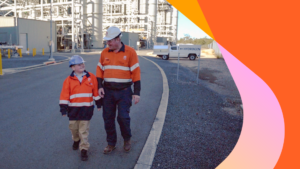
People talk a lot about using more solar and wind these days, but I wanted to see how gas fits in, and what happens before it reaches our homes.
The first thing I wanted to know was what LPG actually stands for. Gas is gas, right? Not exactly. LPG, or liquefied petroleum gas, is different from the natural gas piped directly into some homes. Instead of travelling through pipelines, it’s stored as a liquid in big, pressurised tanks and delivered by truck or cylinder. When it’s used, it turns back into gas – the same kind that helps heat the water for our showers, and powers our stoves, BBQs and forklifts.
LPG is stored at large facilities called ‘terminals’, not the kind at an airport or bus stop, but the kind built to safely handle big volumes of gas. At Bulwer Island, that means huge storage tanks, long networks of pipes, and busy areas where LPG cylinders are filled, tested and prepared for delivery. Thousands of bottles in all shapes and sizes are neatly stacked and lined up across the site. Every pipe and piece of equipment has its job, and it all has to work just right to stay safe.
Before visiting the terminal, the one thing I did know about gas was that it smells bad, so I thought I might need a peg for my nose during the tour. But the site was nothing like that. It was clean, organised and surprisingly calm. In the middle of the facility there’s a shed where workers fill and check gas bottles (some even taller than me) before using forklifts to load them onto trucks for delivery.
Fun fact: the bad smell is actually added to gas so people can notice a leak straight away. It’s called an ‘odourant’, and it’s made to smell strong and unpleasant on purpose, because if it smelled nice, you might not react to it. That was something else I learned during my visit.
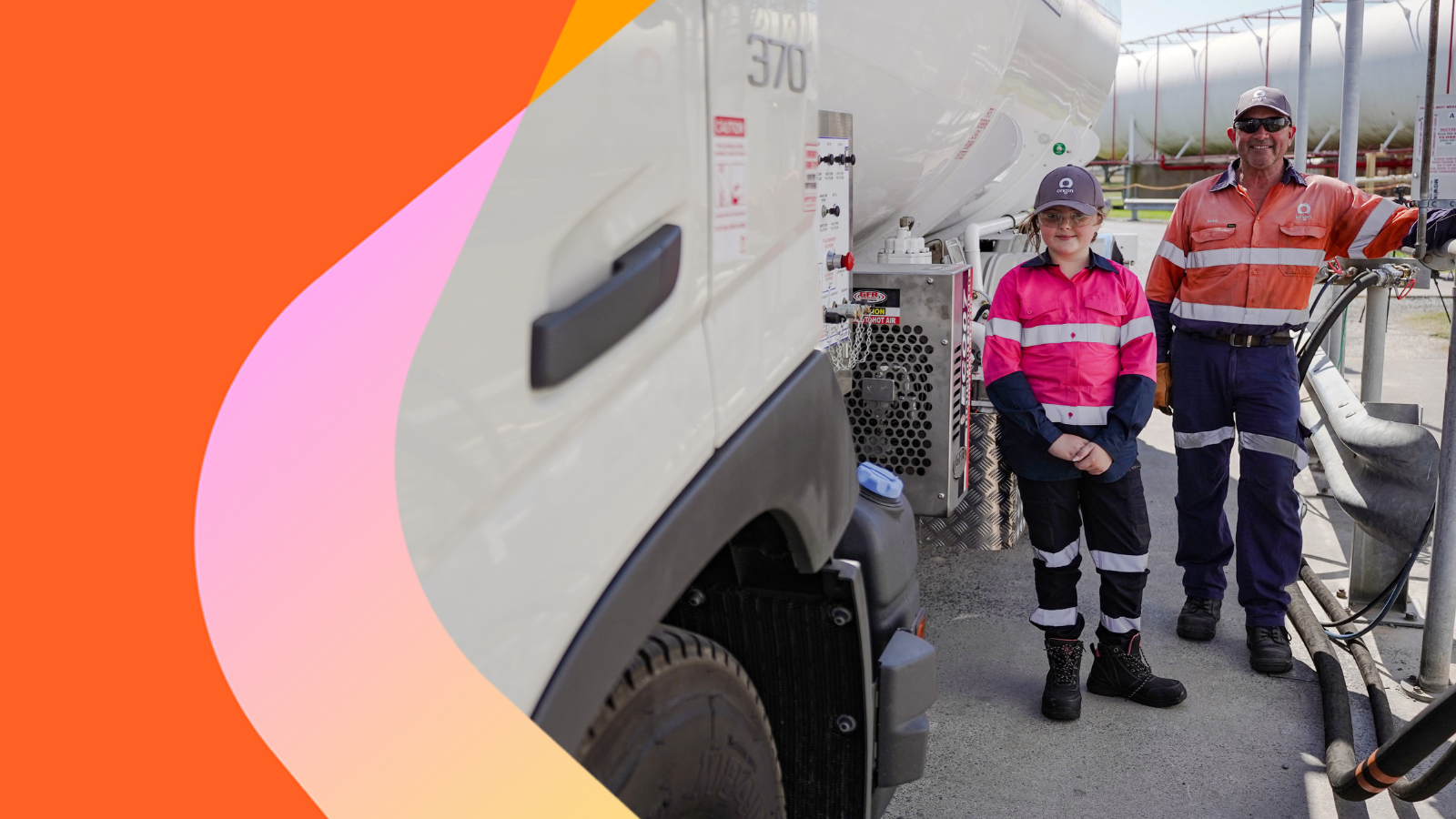
The area where all the gas bottles are stored and sent out is just one part of the terminal. Across the road is where the big LPG tankers fill up from enormous storage tanks. Each tanker truck can hold around 15 to 18 thousand litres of LPG, which they deliver to farms, businesses and other sites that need more than what fits in cylinders. Some of the large long-haul trucks even have a fridge, microwave and bed inside so drivers can rest on long trips – like a little home on wheels.
I also got to sit in the office with the Logistics Managers, Rob and Darren, who take care of planning all the LPG deliveries at Bulwer Island. They make sure everything runs smoothly; from which trucks go where, to when each delivery happens. On one of the big screens in their office, they can even see where every truck is in real time using GPS, so they always know what’s on the move and what’s been delivered.
I found out that gas might not always have the same role in the future, but for now it’s still a big part of how we keep things going. Seeing how it’s stored, moved and used made me realise how much happens behind the scenes to power everyday life. I’ll probably still turn on the stove without thinking about it much, but now I can picture all the steps and the people that make that little flame possible.