Renewable Energy Target
A federal government program to encourage the industry to generate more electricity from sustainable, renewable sources.
What is the Renewable Energy Target?
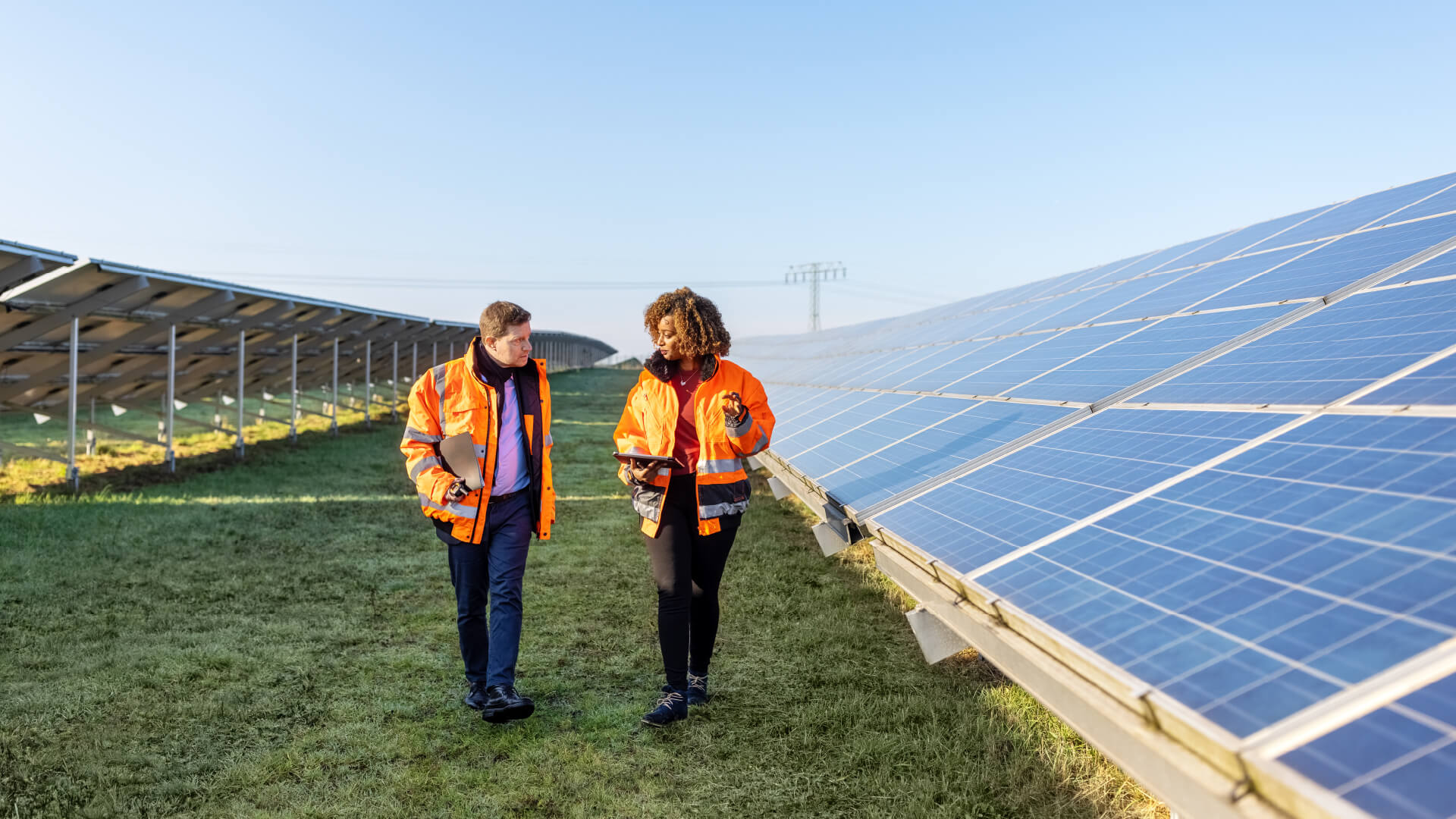
To reduce greenhouse gas emissions in the electricity sector, the federal government has introduced the Renewable Energy Target (RET). The scheme encourages the industry to generate more electricity from sustainable, renewable sources such as rooftop solar.
The RET operates at two levels

Large-scale Renewable Energy Target (LRET)
The LRET reduces emissions in the electricity sector by incentivising large-scale investment in renewable energy. Large-scale Generation Certificates (LGCs) are created and traded to financially incentivise renewable energy creation.
LGCs can be created by generating electricity from renewable energy sources, such as solar and wind, with one LGC equivalent to 1 MWh. Each year, energy generators such as power stations and other liable entities, must provide enough LGCs to offset the emissions they generated during that year. Some of the cost for these LGCs are passed on to energy retailers and in turn to energy customers. The cost to achieve the LRET is shown as the Large-scale Renewable Energy Certificate (LREC) charge on your Origin invoice.

Small-scale Renewable Energy Target (SRET)
At an individual, small business and community level, the SRET is the equivalent program to incentivise investment in renewable energy systems. Certificates are created based on smaller-scale renewable energy generation and are then traded to offset emissions.
The small-scale Renewable Energy Scheme section on the Clean Energy Regulator CER website is a great source of information on this scheme.
On your Origin invoice, the cost to achieve the SRET is shown as the SREC or Small-scale Renewable Energy Certificate charge.
State based charges
While the LRET and SRET are calculated at a national level, individual states also have schemes to address their own sustainability goals. To learn more about any state-based charges on your bill, refer to the respective state government websites:
New South Wales (e.g. FCAS charges)
Queensland (e.g. FCAS charges)
Access incentives suitable for your business
If you’re interested in learning more about Renewable Energy Targets or you want to purchase large-scale generation certificates for your business, our team of experts are keen to hear from you.
FAQs
If you’re after support or advice about large business energy solutions or managing your Origin Zero account, we’re here to help. Search our site, browse our Help & Support section or contact us.
What is the LREC charge on my invoice?
The Clean Energy Regulator publishes the Renewable Power Percentages (RPP) report in March each year, to track the energy industry’s progress against incremental RET targets. In doing so, they report on the current year’s actual figure and make an estimate at what the following year’s percentage will likely be.
Some customers, depending on their Electricity Supply Agreement, are charged for LREC against the ‘forecast environmental %’ as estimated in the RPP report. Once the actual RPP is published in March, we will include an adjustment in April for the difference between the forecast and actual figure.
Check the section titled ‘Environmental Products & Rates’ on your Electricity Supply Agreement to see further details about your specific rate structure.
What is the SREC charge on my invoice?
Like the renewable power percentage, small-scale technology percentages are published by the Clean Energy Regulator. The figures published are a final figure for the previous year, and a forecast percentage figure for the coming year. Adjustments to your small-scale technology percentage charge are made in April to align to the actual percentage realised.