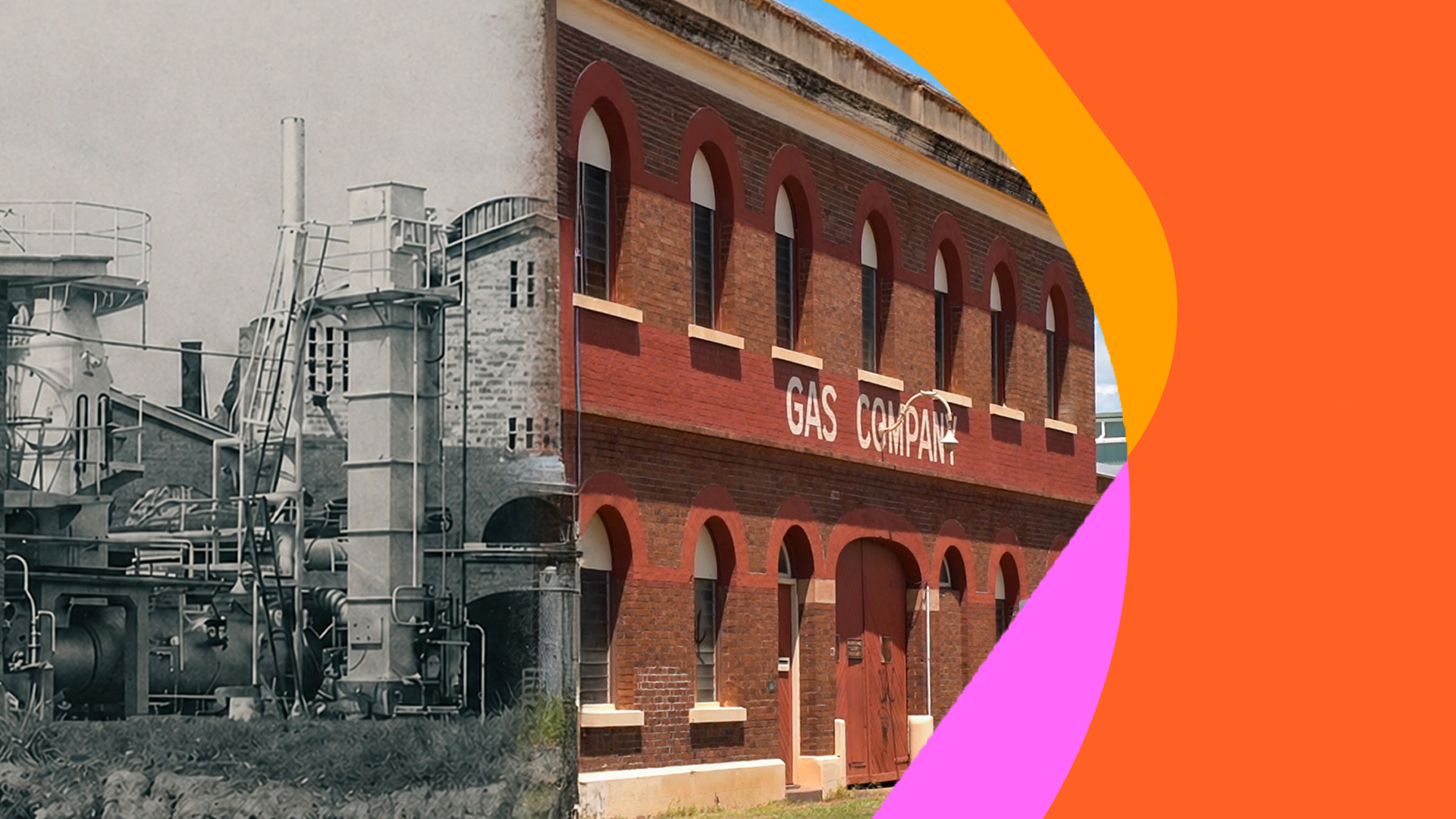
At first glance, the Maryborough LPG Terminal feels more like a historical gasworks than a working site. In some ways, that’s true. The site at Bowen Street has been part of Maryborough’s energy story since the late 1800s. Gas first lit the town’s streets in 1879, and by 1883 the brick gasworks building was complete, producing coal gas for homes and businesses across the region.
Look up at the front of the building and you’ll see a Latin phrase set above the entrance: Ex Fumo Dare Lucem – “to bring light from smoke.” It’s been there since the early days of the gasworks, marking the purpose the site was built for.
While the technology has changed, the role hasn’t. The site transitioned from coal gas to LPG in the 1960s, marking a shift into the modern energy era. Today, it continues to supply gas across the Fraser Coast as part of our LPG network.
Walking through the building, much of that earlier history is still in place.
There’s the original weighbridge, once used to measure coal deliveries arriving by horse and cart. It’s still there, even if it’s no longer used. There are small windows set into the brick walls with old Bunsen burners, which operators once relied on to monitor gas supply across the town. The height of the flame told them everything they needed to know. If it dropped, demand was up, and they needed to respond.
Upstairs, parts of the old workspace remain, where coal was analysed and equipment still sits in place. Down the hall, the former office holds rows of metal filing cabinets, some still filled with customer records from another time.
One of the LPG terminal operators Tony Van Latham has spent years working at the site and, over time, has become deeply familiar with its history. From the original building features to the way the equipment was once used, it’s knowledge that’s been built up on the ground and passed on through experience.
It’s easy to think of energy as something that just works in the background. But sites like Maryborough show how much has changed, and how much has stayed the same.
The building itself is now heritage listed, recognised as one of the few remaining 19th century gasworks structures in the region. Still part of a working site today, it’s a place where the past and present of energy continue to meet.