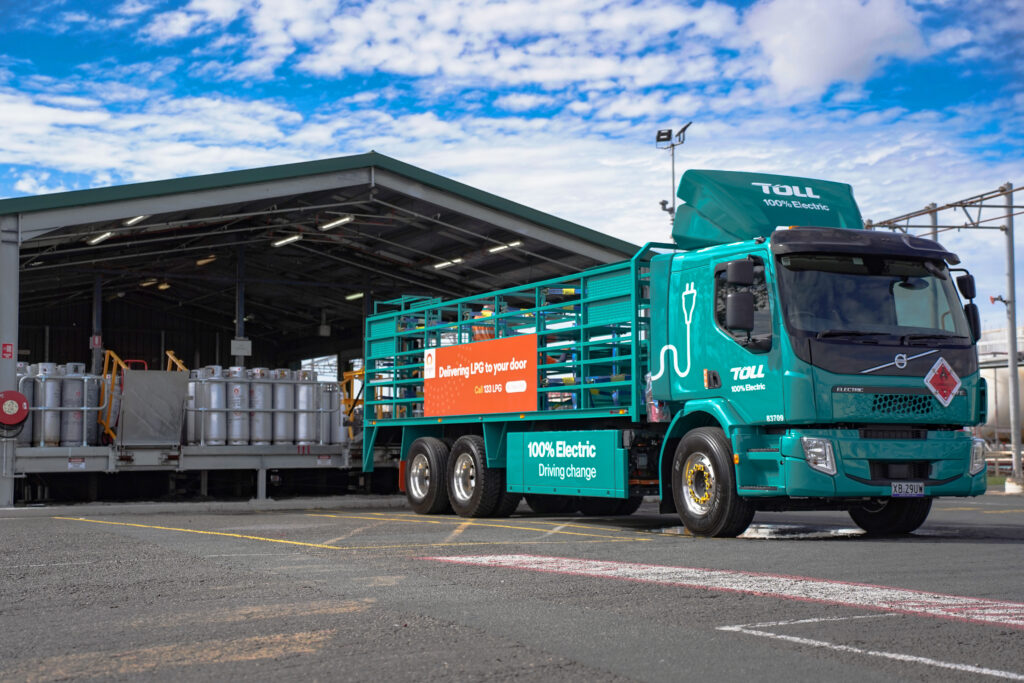
We recently introduced our first electric LPG cylinder delivery truck, developed with Toll Group. Purpose-built for cylinder delivery, the new Volvo FE Electric 4×2 rigid truck and its charging infrastructure were commissioned at our Bulwer Island LPG Terminal in Brisbane. It’s an early step, but one that reflects how we’re rethinking the way LPG is delivered.
1. Reducing greenhouse gas emissions
Incorporating battery electric vehicle (BEV) trucks into our LPG fleet can help reduce greenhouse gas emissions from our delivery operations. Unlike diesel trucks, electric trucks have no tailpipe emissions That means fewer emissions released into the air on each delivery and a lower overall emissions footprint for LPG deliveries.
Compared with a traditional diesel truck, the BEV at Bulwer Island is expected to reduce tonnes of CO₂ emissions each year. This supports Origin’s focus on lower emissions operations. While this is one vehicle to start with, it provides a clear pathway for reducing emissions from a part of our operations that runs every day.
2. Lower operating costs over time
Electric vehicles can have lower running costs than diesel trucks, largely due to the cost of electricity compared with traditional fuels and fewer moving parts that require maintenance. Our 23-tonne battery-powered truck charges overnight for around nine hours at our Bulwer Island terminal. Once charged, it offers a daily range of approximately 200 to 275 kilometres, allowing it to serve around 19 to 23 customers each day.
3. Learning how to inform future investment
Introducing an electric truck gives us real world data on performance, charging requirements, maintenance and driver experience. These insights help us understand where electric vehicles make sense in our fleet today and where improvements are still needed before broader rollout. It’s a measured approach that supports smarter decisions about future fleet upgrades.
This initial investment shows that electric heavy vehicles can be integrated into day-to-day operations and support supply chains. Over time, what we learn will help guide future decisions about how electric vehicles could support the ongoing evolution of our LPG operations.