The proposed Kerrawary Power Station (KPS) would be built on Origin-owned land at Big Hill, near Marulan in the NSW Southern Tablelands. The project would also include an associated gas pipeline of up to 35km, connecting the power station to the Moomba Sydney Pipeline.
If developed, Kerrawary could provide up to 1,200 MW of fast-start, dispatchable generation when needed to support grid reliability.
As older coal-fired power stations retire and more renewable generation comes online, it is important to have flexible back-up generation that can start quickly when the sun isn’t shining or the wind isn’t blowing. The Australian Energy Market Operator’s (AEMO) Integrated System Plan identifies a need for significant additional gas-fired peaking capacity to firm renewables and maintain reliability through the ongoing energy transition.
Kerrawary would be operated to complement, not replace, renewable energy and storage, and to support the orderly retirement of coal-fired generation.
Why this site
Origin assessed several locations across the Southern Highlands region for their proximity to existing high-voltage transmission infrastructure (330kV/500kV lines) and high-pressure gas infrastructure (the Moomba Sydney Pipeline), reducing the amount of new infrastructure required. One of the key reasons the Kerrawary site at Big Hill was selected was because it was identified as likely to have a lower noise and visual impact on nearby residents than the alternative sites considered.
What the project would include
- Open-cycle gas turbine generators
- Electrical switchyard (330kV, with future 500kV capability)
- Gas pipeline, up to 35km, buried, connecting to the existing Moomba Sydney Pipeline
- Supporting infrastructure including site access roads, water and wastewater facilities, workshops and offices
Anticipated regional benefits
- Around 450 jobs at peak during construction of the power station, and 200–250 for the pipeline, plus 6 ongoing operational roles
- Local procurement and business opportunities
- Skills, training and workforce development initiatives
- Community investment programs and partnerships, including Voluntary Planning Agreements and partnerships with First Nations communities and local business
Indicative timeline
- 2026 – Community consultation and Scoping Report preparation
- 2027–2028 – Environmental Impact Statement (EIS) preparation, informed by SEARs and further community engagement
- 2028 – Public exhibition of draft EIS and government assessment
- 2029–2033 – Subject to approval: construction and commissioning
- 2033 onward – Planned operations (30+ year life)
Where we are in the process
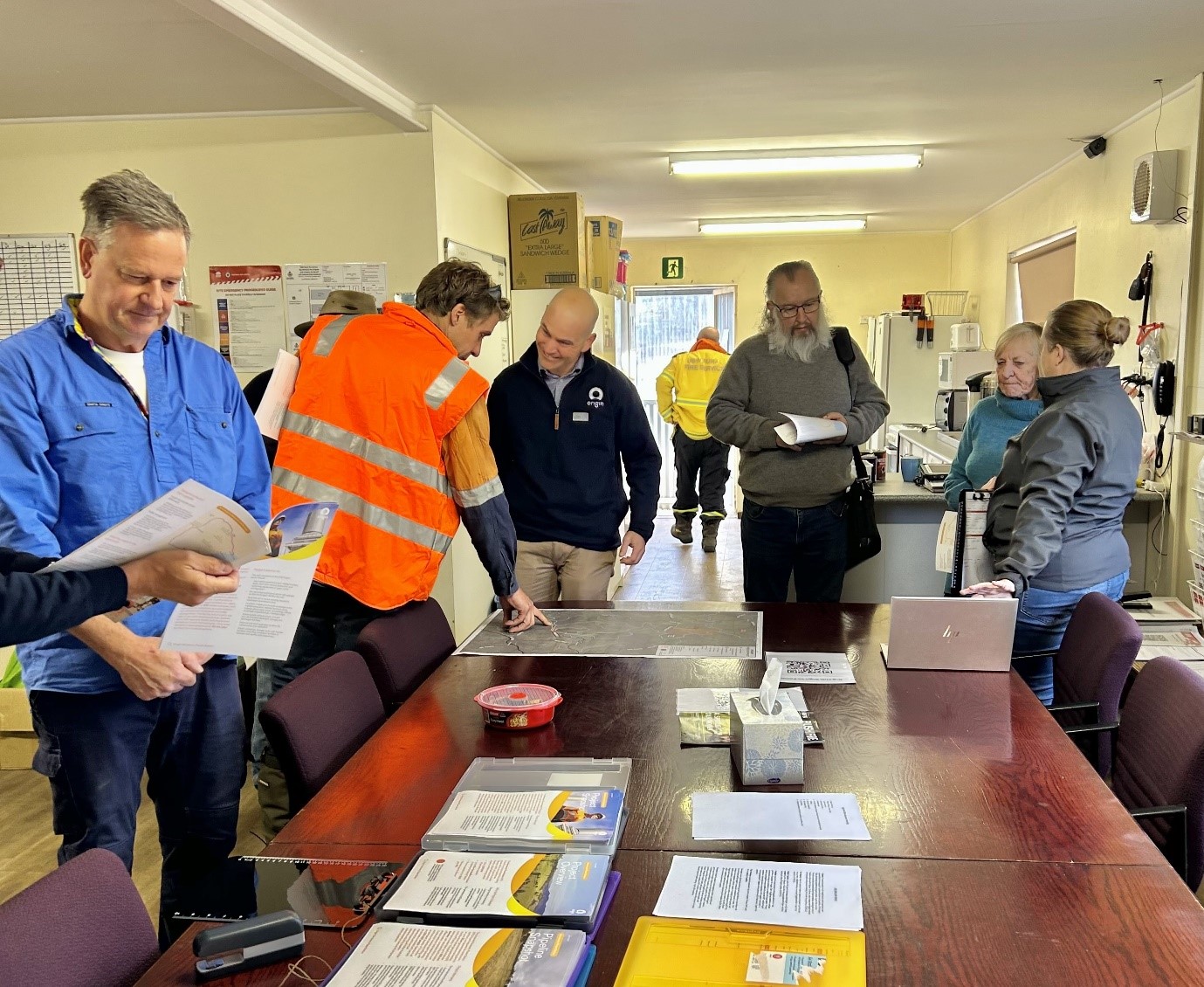
We are at an early, pre-EIS stage of planning, with no approvals yet sought or granted. Origin recently consulted with the local community, landholders and councils to gather feedback ahead of submitting a Scoping Report to the NSW Government.
What is a Scoping Report?
A Scoping Report is an early planning document submitted before a full Environmental Impact Statement (EIS). It describes the proposed project and identifies the key environmental, social and technical matters, such as traffic, noise, biodiversity, water and cultural heritage, that will need to be studied in detail. It does not seek approval for the project. Feedback gathered during the Scoping Report consultation stage will directly inform what is studied, and how potential impacts are addressed, in the subsequent EIS.
Next steps
- Origin submits the Scoping Report to the NSW Government
- The NSW Government issues formal environmental assessment requirements (SEARs)
- Origin prepares a comprehensive EIS, informed by detailed technical studies and further community engagement
- The draft EIS is placed on public exhibition, giving the community a formal opportunity to review and comment
- The NSW Government makes a determination
Have your say
There will be many opportunities for the community to have their say on this project through its planning and development. We encourage anyone with questions to contact the project team or attend a future information session. Community members can share feedback at any time via information sessions or directly with the project team.
Call 1800 677 315 or email kerrawary@originenergy.com.au for further information or to share feedback.
Kerrawary Community Investment Program
Origin has proudly supported communities across NSW through community investment programs for more than a decade. Origin’s community investment activities target community wellbeing, community resilience, economic development and the environment.
About the Program
The Kerrawary Power Station Community Investment Program is one component of Origin’s shared benefits program.
Origin is proud to support communities near the Kerrawary Power Station project through a dedicated Community Investment Program. We recognise that major energy projects have an impact on the places and people around them, and we’re committed to giving back in meaningful ways.
The program will accept applications of up to $10,000 to support events or initiatives that align to one or more of the community investment priorities.
Origin’s Kerrawary Community Investment Program Guidelines provide more detail about focus areas, eligibility (including things we won’t support) and how applications will be assessed.
Key Dates
- Round 1 closed Sunday 8 November 2026
Frequently asked questions
Why is Origin proposing?
Origin is in the early stages of planning for the proposed development of the Kerrawary Power Station, an open-cycle gas turbine peaking power station of up to 1,200 MW, on Origin-owned land at Big Hill near Marulan in the NSW Southern Tablelands. The project also includes an associated gas pipeline of up to 35km connecting to the Moomba Sydney Pipeline. If developed, and subject to approvals, the project could be operational from 2033.
Why Big Hill, near Marulan?
Origin assessed several locations across the Southern Highlands region because of their proximity to existing high-pressure gas infrastructure (the Moomba Sydney Pipeline) and electricity transmission infrastructure (330kV/500kV lines), reducing the amount of new infrastructure needed. Within the region, one of the reasons the Kerrawary site was selected was because it was identified as likely to have a lower noise and visual impact on nearby residents than the alternative sites considered.
Kerrawary could run less than 15% of the time. Why is it needed?
A low expected utilisation rate doesn’t mean the capacity isn’t needed, it reflects how peaking plants are meant to operate, running during periods of high demand or low renewable output. At those critical moments, having enough total dispatchable capacity available across the system is what keeps the lights on.
Where are you up to in the process?
We’re at a very early stage. Origin recently consulted with the local community, landholders and councils to gather feedback ahead of submitting a Scoping Report to the NSW Government. Once submitted, the Scoping Report would be followed by formal environmental assessment requirements, a detailed Environmental Impact Statement (EIS), public exhibition and government determination, a process expected to take several years before any decision would be made.
What impacts might be expected, and how will they be managed?
A range of matters will need detailed assessment, including traffic and road safety, noise and vibration, air quality, visual impact, biodiversity, water resources, cultural heritage, and impacts on the local community including construction workforce accommodation. These would be examined through technical studies as part of an EIS. Where impacts are identified, we would look to appropriately address them, consistent with relevant requirements.
Why gas? Doesn’t this work against Origin’s emissions reduction ambitions?
Origin’s ambition remains to achieve net zero emissions by 2050 as set out in our 2025 Climate Transition Action Plan. Renewable energy like wind and solar will increasingly do the heavy lifting in the energy transition. But renewables are variable, and as coal power stations retire, fast-start generation can help to fill the gaps when the sun isn’t shining, the wind isn’t blowing, or batteries have discharged. Kerrawary would be designed to run when needed, as a peaking plant, and to complement, not replace, renewables. It would be assessed against greenhouse gas requirements through the EIS.
Would this affect agricultural land?
The power station site would sit on Origin-owned freehold land, currently leased for cattle grazing. For the pipeline, Origin is working to design a route that would minimise impacts on farming operations and access agreements would be negotiated directly with affected landholders. The extent of any impact on agricultural land would be assessed as part of the EIS.
Would this affect flora, fauna or biodiversity?
Biodiversity is a key matter that would be studied in detail through the EIS. Early design work has focused on avoiding areas of higher biodiversity value where possible, including through pipeline route selection and construction methods such as trenchless drilling under sensitive areas. Where impacts can’t be avoided, we’ll look at appropriate minimisation, mitigation and offset measures.
Would this affect local water supply?
The power station’s water needs are anticipated to be relatively modest, estimated at up to 90 ML per year, mainly for turbine cooling and general site use. We’re investigating a mix of options, including recycled water, harvested runoff, local river extraction and groundwater, rather than relying on a single source. These options would be tested further with the community and regulators through the EIS process.
What about noise and visual impacts on nearby residents?
Noise and visual amenity were factors in choosing the Kerrawary site over other options in the region. These impacts would still be assessed in detail through the EIS, and mitigation measures developed based on those findings and in consultation with nearby residents.
Would construction cause traffic issues?
Some large components will need to be transported from Port Kembla or the Port of Newcastle, which may require upgrades to sections of local roads. Traffic and transport impacts, along with the delivery route and required road upgrades, are still being investigated and would be assessed in detail through the EIS, in consultation with Transport for NSW and local councils.
Would there be enough accommodation for construction workers?
We recognise local towns have limited capacity to accommodate a construction workforce of the scale likely to be required for this project. We’re currently investigating accommodation options, including the possibility of a temporary workforce accommodation facility on-site, and will work through this with local councils as part of the assessment process.
How will you engage with landholders and Traditional Owners?
Early and ongoing engagement is central to our approach. We’re already engaging landholders along the potential pipeline route, and we’re committed to early and ongoing engagement with Traditional Owners on cultural heritage matters as the project progresses. Cultural heritage would be formally assessed as part of the EIS.
What would be the economic and community benefits?
If developed, the project would represent a significant investment in the region, with construction projected to support around 450 jobs at peak for the power station and 200–250 for the pipeline, plus ongoing operational roles. A range of community benefits may also be made, including local procurement opportunities, skills and training initiatives, community investment programs, Voluntary Planning Agreements, and partnerships with First Nations communities and local business.
Is a data centre planned for this site?
The Kerrawary Power Station Project, as described in our Scoping Report and project description, comprises a proposed gas-fired power station, the associated gas pipeline, the electrical switchyard and transmission connection, and supporting infrastructure such as site access roads, water and wastewater facilities, workshops and offices. A data centre is not part of what is proposed at this site.
Why could it take until 2033 to start operating?
Major energy infrastructure like this has a long lead time, given the need for rigorous environmental assessment, government approvals, detailed design, procurement and construction. If the development proceeds, and subject to approvals, construction could begin around 2029, with operations from 2033, which is anticipated to align with when NSW is projected to need additional dispatchable capacity as coal generation retires.